London Underground Guide 2026: The Easy Way to Use the Tube
Table of Contents
The London Underground looks confusing the first time you see the map.
Eleven lines. Hundreds of stations. Different zones. Oyster cards. Contactless cards. Peak fares. Off-peak fares.
And then someone tells you to change at Bank.
Good luck.
But here’s the good news: using the London Underground is actually incredibly easy once you’ve made your first couple of journeys.
We’ve visited London many times over the years, with and without kids, and the Tube is still the way we get around most of the city.
So if you’re visiting London for the first time, here’s our updated London Underground guide for 2026 — including how to pay, current prices, travelling with children and a few mistakes that can cost you money.
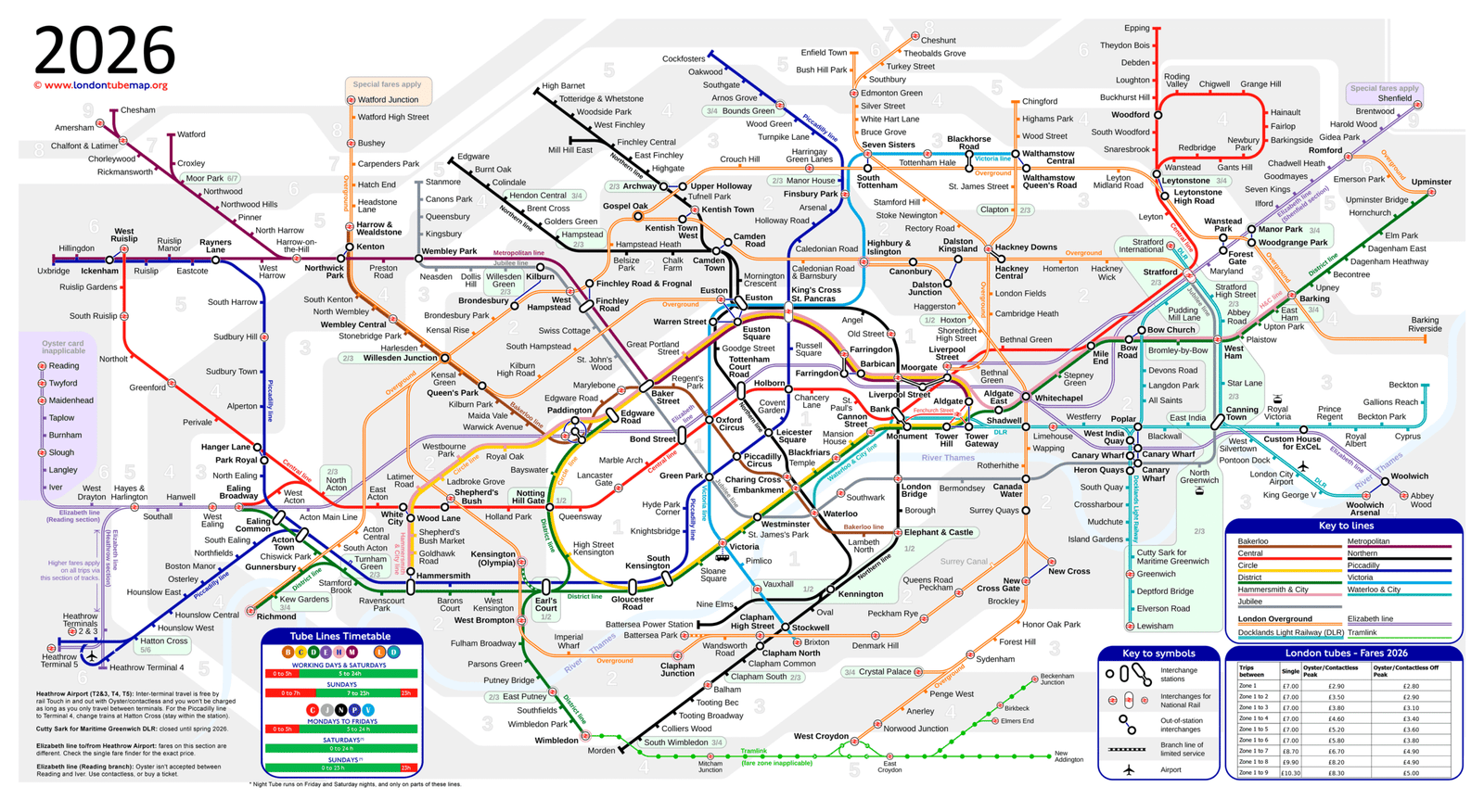
London Underground, Tube or Metro?
First things first.
Londoners generally call it the Tube.
The London Underground opened in 1863, making it the world’s oldest underground railway system.
Today, its 11 lines connect most of the places tourists are likely to visit, and each line has its own name and colour.
You’ll quickly become familiar with names like:
Central – red
Piccadilly – dark blue
Jubilee – grey
Northern – black
District – green
After a day or two, you’ll probably stop looking at the entire map and start thinking:
“Jubilee to Green Park, change to Piccadilly.”
Congratulations. You’re becoming a Londoner.
Well, almost.
How Do You Pay for the London Underground in 2026?
For most visitors, there’s really no need to buy individual Tube tickets.
You have three main options:
Contactless bank card or phone
Oyster card
Travelcard
For most adult tourists, I’d choose contactless.
Simply tap your card, phone or watch on the yellow reader when entering the station and use the same card or device when leaving.
That’s it.
TfL calculates the fare automatically and applies daily and weekly caps when applicable.
One person = one card
This catches some families out.
You cannot tap the whole family through using one contactless card.
Each paying traveller needs a separate payment method.
So Tjaša and I, for example, can’t both travel using the same physical bank card.
And be careful with phones and watches too.
If you tap in using your iPhone and tap out using the physical card connected to it, TfL treats them as different payment methods. That can result in incomplete journeys and higher charges.
Pick one.
And stick with it.
Contactless vs Oyster Card: Which Is Better?
For most adult visitors in 2026:
I’d use contactless.
There’s nothing to buy or top up, and you still benefit from fare capping.
Oyster still makes sense if your bank card doesn’t work with TfL, your bank charges foreign transaction fees, or you need certain child discounts.
A standard Oyster card now has an upfront fee, so buying one simply because “that’s what you use in London” isn’t automatically the cheapest choice anymore. TfL also warns that overseas bank charges can apply when using foreign contactless cards, so check your own bank before travelling.
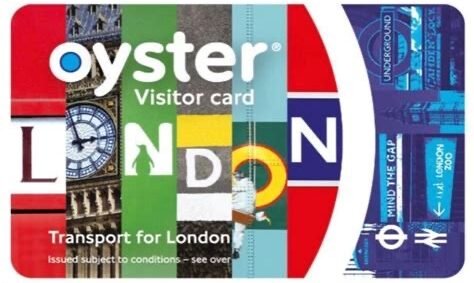
What about a Visitor Oyster Card?
Visitor Oyster works in much the same way for pay-as-you-go travel, but you buy it before arriving in London.
Personally, I wouldn’t complicate things unless there’s a reason you need one.
For two adults arriving in London with suitable contactless cards?
Take the cards out of your wallets.
Tap.
Done.
London Underground Prices in 2026
Tube pay-as-you-go fares increased again from 1 March 2026.
For example, a single Zone 1 journey now costs £3.10 at peak times and £3.00 off-peak. The exact price of longer journeys depends on the zones travelled through, route and time of day.
But for tourists, the more useful number is often the daily cap.
2026 daily caps
One of the most important parts of my London Underground guide is understanding how daily fare caps work.
If you’re using pay as you go, TfL stops charging once you reach the relevant daily cap.
For Zones 1–2, the adult daily cap is:
£8.90
Zones 1–3:
£10.50
Zones 1–4:
£12.80
Zones 1–6:
£16.30
These caps are frozen until 2027.
And that’s one reason I wouldn’t bother buying individual paper tickets.
You can spend the day jumping on and off the Tube while sightseeing and know there’s a ceiling on what you’ll pay for eligible journeys within your zones.
Do Tourists Need to Understand London Travel Zones?
A little.
But don’t overthink it.
London’s transport network is divided into zones radiating outward from the centre.
Most major tourist attractions are in Zones 1 and 2, including areas around Westminster, Covent Garden, Soho, Camden and many other places you’re likely to visit.
If you’re staying centrally, you’ll probably spend most of your time within those first two zones.
The important exceptions tend to be airports and attractions farther from central London.
So you don’t need to memorise nine zones before your trip.
I promise there won’t be an exam.
Peak vs Off-Peak Tube Fares
Peak fares generally apply Monday to Friday during the busiest commuting periods.
For many pay-as-you-go journeys, that’s roughly:
06:30–09:30
and
16:00–19:00
Outside those periods, off-peak fares generally apply, although fare rules can vary by journey. TfL’s Single Fare Finder is the best place to check a specific trip.
But unless saving every last pound is essential, I wouldn’t build an entire London itinerary around avoiding peak time.
There’s another reason to avoid it anyway:
the Tube can get ridiculously busy.
Travelling with two kids while thousands of Londoners are trying to get home from work?
No thanks.
London Underground Guide With Kids
This is where London becomes surprisingly family-friendly and no London Underground guide for families would be complete without explaining child fares, because this is where families can save quite a bit.
Children under 11
Children under 11 can travel free on the Tube, DLR, London Overground, Elizabeth line and some National Rail services when travelling with a fare-paying adult.
Up to four children under 11 can travel free with one paying adult.
That can make a huge difference to the transport budget for a family trip.
At stations, look for the wide luggage/pushchair gate rather than trying to squeeze everyone through a normal barrier.
Children aged 11–15
This changes once they turn 11.
Visitors aged 11–15 can get a Young Visitor discount added to an Oyster or Visitor Oyster card by TfL staff. It gives them 50% off adult pay-as-you-go fares for up to 14 days.
That’s absolutely worth sorting out if you’re visiting London with older kids.
London Underground Guide: How to Use the Tube
This is the bit that scares first-time visitors.
It really shouldn’t.
Let’s say you’re at Westminster and want to go to Tower Hill.
Find your destination on the Tube map.
Look at which line serves it.
Then work out which direction you need.
London Underground platforms are generally labelled by direction or destination rather than simply telling you Platform 1.
Follow the signs.
Get on.
Get off.
Easy.
If you need to change lines, follow the coloured signs for your next line inside the station.
And if you get on the wrong train?
Get off at the next station and come back.
You’ve lost five minutes.
Your holiday isn’t ruined.
Always Touch In AND Touch Out
This one matters.
When using the Tube, DLR, London Overground, Elizabeth line and relevant National Rail services, you generally need to touch in at the beginning and touch out at the end.
Even if a station gate happens to be open, still tap the yellow reader.
Otherwise TfL may not know where your journey ended and you can be charged a maximum fare.
On buses and trams, you only touch in.
What Does “Mind the Gap” Mean?
You’ll hear this one approximately 400 times. 😂
“Mind the gap” simply warns passengers about the space between the train and the platform.
It has become such an iconic London phrase that you’ll see it printed on mugs, T-shirts, bags and basically anything else that can be sold to a tourist.
After a few days, you’ll hear the announcement in your sleep.
Using the Tube With a Pushchair
This requires a little more planning.
Many London Underground stations have step-free access, but plenty still involve stairs, escalators or complicated changes.
On TfL’s map, look for the wheelchair symbols.
There’s also an important distinction between stations that are step-free from street to platform and those that offer step-free access all the way to the train.
If you’re travelling with a pushchair, I’d check your route before leaving rather than discovering three flights of stairs while holding a sleeping toddler.
Check TfL accessibility information
Is the London Underground Safe?
For the vast majority of tourist journeys, the Tube is straightforward to use.
The thing I’d pay most attention to isn’t getting lost.
It’s your belongings.
Busy platforms and packed trains are exactly the places where you don’t want your phone hanging loosely out of a back pocket or an open handbag.
Normal big-city awareness goes a long way.
And with kids, establish one simple rule before the first journey:
Nobody gets onto or off a train until we’re all doing it together.
Doors can close surprisingly quickly.
It’s also worth saving the important numbers before your trip – here’s our guide to emergency numbers in the UK and London.
Can You Take the Tube to Heathrow?
Yes.
Heathrow is connected to central London by both the Piccadilly line and Elizabeth line.
The Elizabeth line is generally faster for many central London journeys, while the Piccadilly line can be useful depending on where you’re staying.
Just remember that airport journeys don’t necessarily behave like your normal Zone 1–2 sightseeing journeys.
For example, the 2026 pay-as-you-go fare on the Elizabeth line between Heathrow and Zone 1 increased to £15.50.
So don’t look at the £8.90 central London daily cap and assume every airport journey is included in that figure.
7 London Underground Mistakes to Avoid
After enough trips to London, these are the ones I’d watch for:
- Buying expensive paper single tickets instead of using pay as you go.
- Using different devices to tap in and out.
- Forgetting to touch out.
- Trying to use one contactless card for two adults.
- Standing on the left side of an escalator. Stand right, walk left. London takes this surprisingly seriously.
- Stopping immediately after the ticket barrier while you figure out where you’re going.
- Assuming every station has a lift when travelling with a pushchair.
Avoid those and you’re already doing better than most first-time visitors.
Is Oyster or Contactless Cheaper in London?
For standard adult pay-as-you-go journeys, the fare structure and capping make contactless extremely convenient, so I’d use contactless unless you have a specific reason to use Oyster.
The bigger question for international visitors is whether your bank charges foreign transaction fees.
If it does, Oyster may make more sense.
If it doesn’t?
I’d save myself the hassle and tap my bank card or phone.
Is a London Travelcard Worth It in 2026?
For the average tourist spending a few days sightseeing around central London, I wouldn’t automatically buy one.
TfL specifically notes that pay as you go with daily capping is cheaper than buying a Day Travelcard for travel in Zones 1–9.
There are circumstances where Travelcards can still make sense, particularly depending on trip length and discounts, but the old advice that every visitor should immediately buy one is outdated.
For a normal three- or four-day city break?
Contactless + daily capping is beautifully simple.
Our Verdict
The London Underground looks far more intimidating on the map than it feels in real life.
Give it a few journeys.
You’ll soon stop thinking about how the system works and start complaining that the next train is three minutes away instead of one.
That’s when you know you’ve made it.
For most visitors in 2026, my advice is simple:
Use contactless, use the same card or device every time, let TfL’s daily cap do its job and don’t overthink it.
And if you’re visiting London with children, take advantage of the free or discounted child travel — it can save a family quite a bit over several days.
I hope this London Underground guide makes your first few Tube journeys a little easier.
Most importantly:
Stand on the right.
Trust me on that one.
Was this guide useful? Buy TravelDad a coffee. It probably won’t pay for the next family trip, but it might cover an airport coffee.


Se ena varianta je… Na Oysterico nalozis nekaj denarja… le toliko, da se prevozis kako daljso razdaljo (z busom, recimo iz cone 3 v cono 2). Po centru Londona imas zdaj mestne bicikle (Boris Bikes – po zupanu Londona Borisu Johnsonu, ki je te bicikle vpeljal), ki so super. Moras pa imeti kreditno ali bancno kartico za to.
Pristopnina za en dan je £1. za en teden pa £5 (http://www.tfl.gov.uk/roadusers/cycling/14811.aspx)
Do pol ure je voznja brezplacna. Po pol ure je £1 (ura) in potem strmo raste. Doki ali bicikl postaje so posejane na najvec 5 min. hoje od ene do druge, torej se lahko za £1 brezplacno vozis po conah 1 in 2.
Kupis dnevno pristopno karto s kodo in gres.. Ce upostevas pravilo 25min (po vsakih 5 minutah parkiras bajk, pocakas 5 minut in vzames novega), je strosek resnicno minimalen…
Vreme: dostikrat oblacno, lahko je precej vetrovno, dezuje pa manj, kot si predstavljamo. A ja.. in avtomobilisti so dokaj kulturni (v primerjavi z nasimi)
Recimo, spomladi je bil moj strosek v enem dnevu: £1.30 za bus do prve bicikl-postaje in potem bus nazaj domov. Vmes sem se vozila z bicikli, imam pa letno narocnino, ki je £45. Zdaj se je tudi bus podrazil!
MINUS TOCKE:
1. Ni biciklov na doku (v blizini je gotovo se kak dok, kjer je precej biciklov – nerodno le, ce se ti zelo mudi)
2. Ni praznih dokov, ko hoces vrnit bicikl – na terminalu se da postimat, da podaljsas (brezplacno) izposojo za 15 minut, kar je obicajno dovolj, da najdes dok.
3. Ljudje s “kljucki” (tisti z letno ali tedensko clanarino) ti speljejo bicikl pred nosom, medtem ko kupujes kartico.
4. Vreme (dez, veter)
5. Placilo le s karticami.
6. Kdo bi znal imet tezave z orientacijo, ker se vozi po ‘napacni’ strani. Zato je treba bit zelo, zelo previden.
Hvala za izčrpen komentar =). Res je, da se z becikli v Londonu še nisem ukvarjal, zveni pa kot zelo zanimiva zadeva. Zagotovo probam pri naslednjem obisku.
No, jaz zivim v Londonu, ki je – kot ves – izredno drago mesto… tako da poznam vse ovinke in finte… in se ucim se novih 😀
Bicikle priporocam, ker so res zelo poceni prevozno sredstvo, sploh ce se ne premaknes dlje od 2. cone.
Sicer pa sanjam o Bromptonu (zlozljivo kolo)..
Moja izkusnja, zadnji dan obiska Londona sem izgubil Oycster card, k sreci skoraj prazno.Ce bi vzel novo bi vrgel stran najemnino. V bliznji trafiki so mi svetovali, da lahko placam z brezticno kreditno kartico. Na prvi voznji mi je pobralo 1funt iz racuna, na vseh ostalih petih voznjah v 1 in2 coni pa nic vec. Ne vem kako to, saj ne najdem nikjer podatka o placilu z tako kartic. Na vratih jo enostavno prislonis na citalec ki se odprejo, enako na izhodu in takoj dobis sporocilo na sms. Zanimivo in poceni. Ni pa preverjeno ,ker je bil to moj zadnji dan Londona.